
IFS Therapy
(Internal Family Systems)
in Burke, VA | Serving Fairfax County.
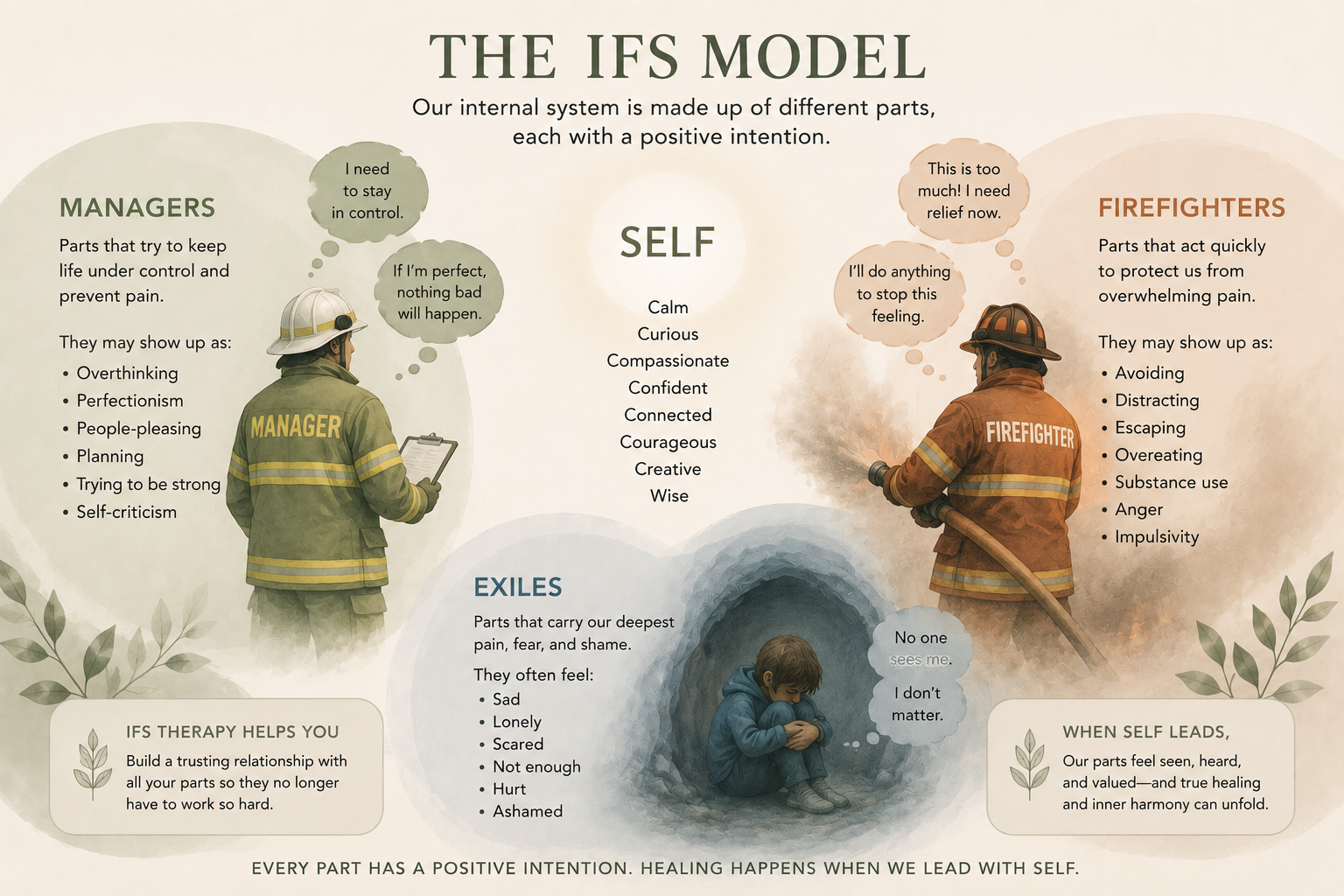
IFS therapy, also known as Internal Family Systems therapy, is a compassionate and evidence-based approach that helps individuals better understand and heal the different “parts” of themselves. Many people notice parts that may feel anxious, self-critical, emotionally overwhelmed, perfectionistic, avoidant, or protective. Rather than viewing these parts as problems, IFS helps create curiosity, understanding, and internal healing.
At Healing & Integration Therapy, Monica Cavalcante, LCSW offers trauma-informed IFS therapy for adults in Burke, Virginia and virtually across Virginia.
What Is IFS Therapy?
Internal Family Systems (IFS) therapy is based on the idea that all people have different internal parts or emotional states. Some parts may carry pain from past experiences, while others work hard to protect us from feeling vulnerable, rejected, hurt, or unsafe.
For example, someone may notice:
an inner critic
a perfectionistic part
an anxious part
a people-pleasing part
an emotionally shut-down part
a part that avoids conflict
a younger wounded part carrying sadness, shame, or fear
IFS therapy helps individuals develop a more compassionate and connected relationship with these parts rather than fighting against them.
The goal is not to “get rid” of parts, but to better understand them and help them feel less burdened by past experiences and emotional pain.
How IFS Therapy Can Help
IFS therapy may help individuals struggling with:
trauma and childhood trauma
anxiety and emotional overwhelm
shame and self-criticism
perfectionism
people-pleasing patterns
relationship difficulties
chronic stress
emotional numbness
difficulty trusting others
low self-worth
intrusive thoughts
burnout
nervous system dysregulation
IFS therapy can be particularly helpful for individuals who intellectually understand their struggles but continue to feel emotionally stuck.
IFS and Trauma Therapy
Traumatic experiences can cause certain protective patterns to develop as a way to help us survive emotionally. Over time, these patterns may begin to create distress, disconnection, anxiety, avoidance, or difficulty feeling emotionally safe.
IFS therapy approaches trauma with curiosity and compassion rather than judgment or force. Many individuals find this approach gentler and less pathologizing.
As a trauma therapist, Monica integrates trauma-informed approaches tailored to each client’s needs. Depending on the individual and clinical goals, therapy may also incorporate approaches such as EMDR therapy, CBT, DBT-informed interventions, and ERP for OCD and anxiety.
What an IFS Session May Feel Like
IFS therapy is often experienced as collaborative, reflective, and compassionate. Sessions may involve slowing down, noticing emotions, exploring protective patterns, and building awareness around internal experiences.
Rather than trying to suppress emotions, therapy focuses on understanding what different parts may be trying to communicate or protect.
Many clients find that IFS therapy helps them:
feel more connected to themselves
develop greater self-compassion
reduce shame and internal conflict
improve emotional regulation
better understand recurring patterns in relationships and daily life.
Is IFS therapy evidence-based?
IFS is an increasingly researched and widely used therapeutic model that is commonly utilized in trauma therapy and emotional healing work.
Can IFS help with trauma?
Yes. IFS therapy is frequently used to help individuals process and heal from trauma, particularly when protective patterns, shame, emotional overwhelm, or inner conflict are present.
What is “parts work”?
Parts work refers to exploring and understanding the different emotional parts or internal experiences individuals may notice within themselves.
Can EMDR and IFS be used together?
Yes. For some clients, EMDR and IFS can complement each other well as part of trauma therapy treatment.
IFS Therapy in Burke, Virginia
If you are interested in learning more about IFS therapy or exploring whether therapy may be a good fit, you are welcome to reach out to schedule a free 15-minute consultation.
Monica Cavalcante, LCSW provides IFS therapy for adults in Burke, Virginia, serving individuals throughout Fairfax County and Northern Virginia. Virtual therapy is also available for clients across Virginia. Sessions are offered in-person and virtually, with limited late evening appointments available.
Schedule a Consultation